
 Beds
Beds
 Accessories

Does the end of the day bring a sense of anxiety rather than calm? If your head hits the pillow only for your mind to start racing, leaving you to toss and turn, you are not alone. Waking up feeling unrefreshed is a frustrating cycle, but it’s one you have the power to break. The secret to transforming your nights and energising your days lies not in a magic pill, but in a simple, powerful tool: a personalised bedtime routine. While you may have the most luxurious mattress, preparing your mind and body for rest is the final, crucial step to unlocking a truly peaceful night’s sleep.
As sleep specialists, we understand that quality rest is the ultimate luxury. In this guide, we will walk you through the science-backed steps to craft your perfect evening ritual. You will discover how to calm your thoughts, prepare your body for deep, restorative sleep, and wake up feeling genuinely ready for the day ahead. It’s time to stop just going to bed and start preparing to truly rest-and finally, sleep like royalty.
Why a Bedtime Routine is Your Secret Weapon for Better Sleep
In our fast-paced world, the transition from a demanding day to a peaceful night’s sleep can feel abrupt and challenging. This is where a dedicated bedtime routine becomes your most powerful ally for achieving luxury rest. Far from being another chore on your to-do list, it is a consistent set of calming activities performed each night in the 30 to 60 minutes before you settle into your premium bed. The goal is simple yet profound: to create a clear boundary between your active day and your restorative night, signaling to your mind and body that it’s time to unwind and prepare for deep, quality sleep.
The Science of Winding Down
Your body operates on a remarkable internal 24-hour clock known as the circadian rhythm, which dictates your sleep-wake patterns. This natural cycle is highly sensitive to environmental cues, especially light. Evening exposure to bright lights-particularly the blue light emitted from phones, tablets, and computers-disrupts this rhythm by suppressing melatonin, the essential hormone that signals sleepiness to your brain. A consistent routine acts as a powerful, non-negotiable cue to your internal clock. By dimming the lights, stepping away from screens, and engaging in quiet activities, you trigger the natural release of melatonin, preparing your body for a seamless transition into sleep. These practices are a cornerstone of what sleep specialists call sleep hygiene. If you’re wondering What is Sleep Hygiene?, it encompasses all the habits and environmental factors that can be adjusted to promote truly restorative rest.
How Routines Reduce Evening Stress and Anxiety
It’s nearly impossible to achieve tranquil sleep when your mind is racing with the day’s worries or tomorrow’s tasks. A well-designed routine actively works to lower levels of cortisol, the body’s primary stress hormone, which can keep you feeling wired and alert. By swapping scrolling for soothing activities-like sipping a caffeine-free herbal tea, meditating, or journaling-you give your nervous system permission to calm down. The psychological benefit is just as significant. The sheer predictability of a bedtime routine creates a comforting sense of control and safety in a world that often feels chaotic. This structured time for self-care helps you process your thoughts and let go of anxiety, allowing you to drift off into the ultra-relaxing sleep you deserve.
The Building Blocks: 10 Ideas for Your Ideal Bedtime Routine
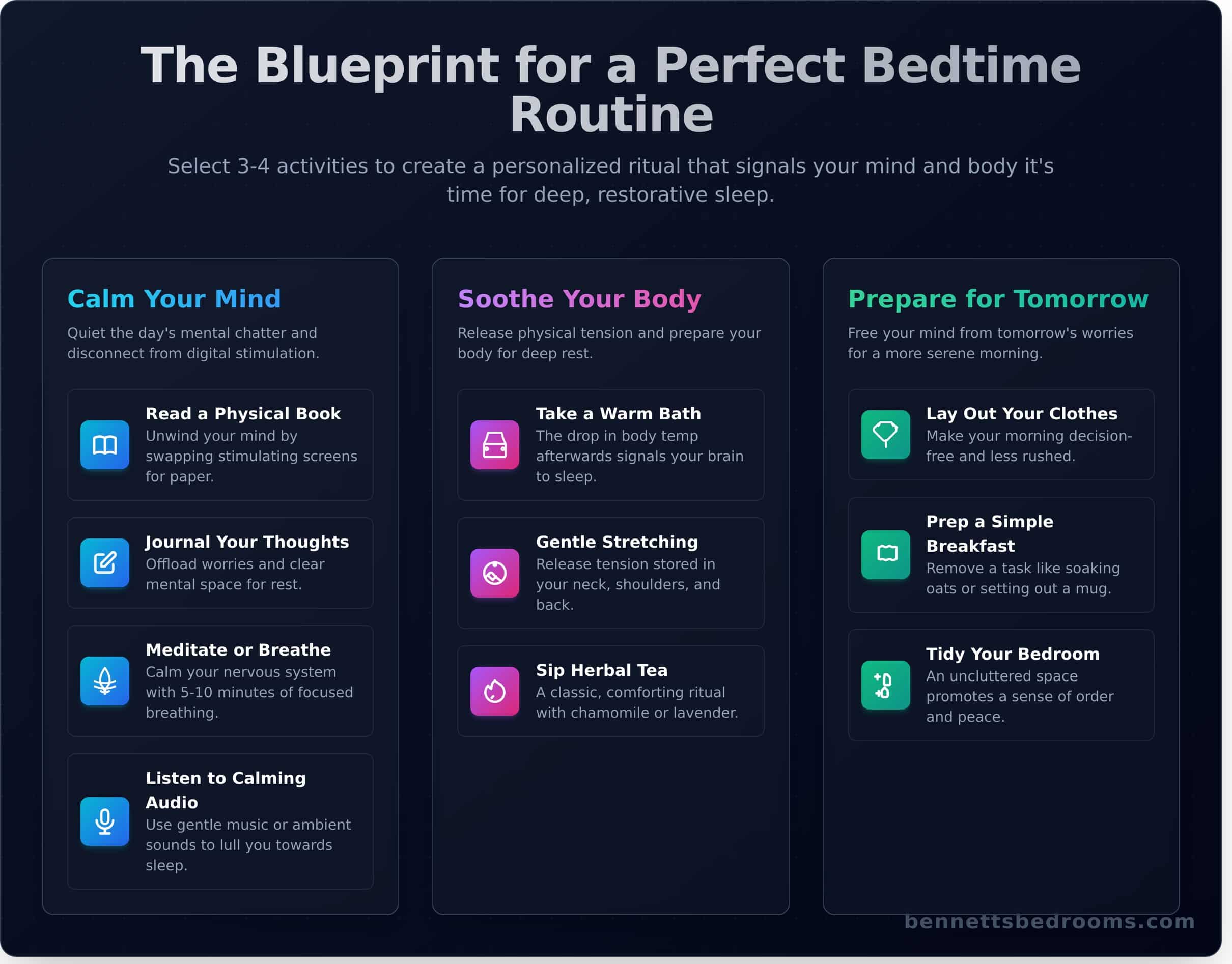
Your bedroom should be a sanctuary, and your evening ritual is the key to unlocking its full potential. Think of the following ideas not as a strict checklist, but as a curated menu of options. The most effective bedtime routine is one you genuinely enjoy and can stick with consistently. We recommend selecting three or four activities that bring you a sense of peace, crafting a personalised sequence that signals to your body it’s time for restorative, luxurious sleep.
Activities to Calm Your Mind
The transition to sleep begins with quieting the day’s mental chatter. These activities help you disconnect from digital stimulation and daily stresses, easing you into a state of pure tranquility.
- Read a Physical Book: Swap the stimulating blue light of screens for the tactile comfort of paper. Losing yourself in a story is a timeless and proven way to unwind your mind.
- Journal Your Thoughts: Offload your thoughts by writing down lingering worries or creating a simple to-do list for tomorrow. This act of “parking” your concerns clears essential mental space for rest.
- Meditate or Breathe Deeply: Use a guided meditation app or simply focus on slow, deep breaths for five to ten minutes. This powerful practice helps calm your entire nervous system.
- Listen to Calming Audio: Create a soothing soundscape with gentle music, ambient sounds like rainfall, or even a quiet, narrative podcast to lull you towards sleep.
Activities to Soothe Your Body
Physical relaxation is just as crucial as mental calm. These practices help release tension from your muscles and prepare your body for deep rest. Taking these small steps can have a profound impact, even improving factors related to your overall well-being, including the connection between sleep and your heart health by reducing nightly stress.
- Take a Warm Bath or Shower: The subsequent drop in your body temperature after emerging from a warm bath signals to your brain that it’s time to sleep, all while relaxing tired muscles.
- Gentle Stretching or Yin Yoga: Focus on slow, gentle movements to release the physical tension stored in your neck, shoulders, and back after a long day.
- Sip Caffeine-Free Herbal Tea: A warm cup of chamomile, lavender, or peppermint tea is a classic, comforting ritual to end the day.
Activities to Prepare for Tomorrow
A truly peaceful night starts with a mind free from tomorrow’s worries. A few minutes of simple preparation can make your morning significantly more serene, allowing you to fully relax tonight.
- Lay Out Your Clothes: Make your morning decision-free by choosing your outfit the night before.
- Prepare a Simple Breakfast: Soaking oats or setting out your coffee mug removes a task from your morning rush.
- Tidy Your Bedroom: A clean, uncluttered environment promotes a sense of order and peace, reinforcing your bedroom as a true sanctuary for rest.
Your Bedroom: The Foundation of a Restful Night
While previous sections focused on pre-sleep activities, this is the non-negotiable foundation. You can meditate for an hour and drink all the chamomile tea you want, but no bedtime routine can overcome a disruptive sleep environment. Your bedroom should be a sanctuary, a space reserved exclusively for sleep and intimacy. This powerful psychological association is a cornerstone of effective healthy sleep habits. Investing in your sleep environment isn’t an expense; it’s a direct investment in your long-term health and well-being.
The Critical Role of Your Mattress and Bed
An old or unsuitable mattress is a primary cause of restless nights. If you’re constantly tossing and turning to find a comfortable spot, or waking up with aches, your mattress is failing you. A premium, supportive mattress aligns your spine and cradles pressure points, allowing your muscles to fully relax. This is complemented by a quality bed frame, which provides a silent, stable base, ensuring you’re not disturbed by creaks or shifts. Find the perfect mattress to anchor your bedtime routine.
Choosing the Right Bedding and Pillows
The materials that touch your skin all night play a significant role in your comfort. Choose natural, breathable fabrics like high-quality cotton or luxurious linen, which excel at regulating body temperature and wicking away moisture. Your pillow is just as crucial; it should provide the correct support for your head and neck alignment based on your preferred sleeping position. The tactile sensation of premium linens can become a powerful sensory cue, signaling to your brain that it’s time to unwind.
Optimizing Light, Temperature, and Sound
Finally, master the ambient conditions of your sanctuary. Your goal is to eliminate any sensory input that could signal your brain to stay awake.
- Light: Aim for absolute darkness. Invest in blackout curtains or a quality sleep mask to block all external light, which can disrupt melatonin production.
- Temperature: A cool room promotes deeper sleep. The ideal range is around 18°C (65°F), so adjust your thermostat or use fans to create a cool, comfortable environment.
- Sound: Unpredictable noises can jolt you out of sleep. If your surroundings are noisy, consider using earplugs or a white noise machine to create a consistent, soothing soundscape.
How to Build Your Personalized Routine in 4 Simple Steps
Transforming ideas into action is the key to unlocking better sleep. This simple, four-step framework is designed to help you craft a personalized bedtime routine you can begin tonight. The goal isn’t to add another chore to your list, but to create a luxurious, effortless ritual that signals to your mind and body that it’s time for restorative rest. The most effective routine is always the one you can consistently enjoy.
Step 1: Choose Your Bedtime and Wind-Down Start Time
Begin with the end in mind. First, determine your ideal wake-up time, then count backward 7-9 hours to find your target bedtime. Set a dedicated “wind-down alarm” for 30 to 60 minutes before this time. This is your non-negotiable signal to power down all screens, dim the lights, and officially begin your transition from a busy day to a peaceful night.
Step 2: Select 3-4 Calming Activities You Enjoy
From the building blocks mentioned earlier, choose just three or four activities that genuinely appeal to you. Starting small prevents you from feeling overwhelmed. For a balanced approach, we recommend selecting a mix that soothes both body and mind. For example:
- 10 minutes of gentle stretching to release physical tension.
- Sipping a cup of caffeine-free chamomile or lavender tea.
- Reading a few pages of a physical book (not on a screen).
Step 3: Practice Consistency for at Least One Week
Your brain learns through repetition. For the first week, your only goal is consistency. By performing the same sequence of calming actions each night, you create powerful neurological cues that it’s time to sleep. Follow your chosen activities in the same order. Don’t aim for perfection; simply showing up for your new habit is the most important step.
Step 4: Assess and Adjust as Needed
After a week, take a moment to reflect. Are you feeling calmer before bed? Do you notice yourself falling asleep more easily? If an activity feels more like a task than a treat, swap it for something else. Your perfect bedtime routine can and should evolve as your needs change. This is your personal ritual, designed to deliver the quality rest you deserve. After all, a premium routine is the perfect preparation for the deep, restorative sleep you’ll find in a truly exceptional bed.
Common Bedtime Routine Mistakes (And How to Avoid Them)
You’ve curated the perfect wind-down activities, but still find yourself tossing and turning. Often, the culprit isn’t the routine itself, but small, overlooked habits that sabotage your best intentions. By making a few simple tweaks in the final hours before sleep, you can ensure your path to a peaceful night is clear and your body is ready for deep, restorative rest.
Consuming the Wrong Things
What you eat and drink in the evening has a profound impact on your sleep quality. While a glass of wine might feel relaxing, alcohol disrupts vital REM sleep later in the night, leaving you feeling groggy. Caffeine is another major offender, as it can linger in your system for up to 10 hours. To be safe, enjoy your last coffee in the early afternoon. Finally, avoid heavy meals or sugary snacks before bed, as these can cause indigestion or blood sugar spikes that can jolt you awake.
Staying Too Active
Your body needs clear signals that it’s time to rest, but certain activities send the opposite message. In the final hours before you sleep, it’s crucial to avoid:
- Intense Exercise: This can raise your core body temperature, heart rate, and cortisol levels, making it difficult to wind down. Swap high-intensity workouts for gentle stretching or yoga.
- Stressful Conversations: Difficult or emotional discussions can trigger a ‘fight or flight’ response, keeping your mind alert and anxious. Postpone these important talks for the daytime.
- Engaging in Work: Checking work emails or finalising reports keeps your brain in a problem-solving state. Create a firm boundary at least 90 minutes before bed where all work is put aside for the night.
Inconsistency and ‘Weekend Jetlag’
Consistency is the cornerstone of an effective bedtime routine. Drastically altering your sleep schedule on weekends-sleeping in for hours later than usual-confuses your internal body clock, leading to a phenomenon known as ‘social jetlag’. For premium sleep quality, try to wake up and go to bed within an hour of your weekday schedule. Don’t worry if you miss your routine one night; the key is to simply get back on track the next. The goal is progress, not perfection.
By avoiding these common pitfalls, you create the ideal conditions for your body to fully embrace the comfort of your bed. A truly luxurious sleep experience begins long before your head hits the pillow. For expert advice on creating the ultimate sleep sanctuary, explore our curated collections at bennettsbedrooms.com.
Sleep Like Royalty: Your Perfect Bedtime Routine Awaits
Mastering your sleep is not about a magic pill, but the small, consistent actions you take each evening. As we’ve explored, creating a personalized bedtime routine is the most powerful step you can take towards rejuvenating rest. By focusing on relaxing activities and optimising your environment, you signal to your body and mind that it’s time to unwind, paving the way for a deeper, more restorative night.
While your habits are crucial, the quality of your bed is the non-negotiable centrepiece of your sleep haven. As Sleep Specialists with expertise across the UK and Portugal, we understand what it takes to achieve true rest. We provide a curated collection of premium, handmade beds from NBF-approved brands, with fast delivery and professional installation throughout the Algarve. Your sanctuary is the foundation of your routine.
Ready to Sleep Like Royalty? Discover the perfect bed for your sleep sanctuary.
Your journey to waking up refreshed and revitalised begins tonight. Here’s to your best sleep yet.
Frequently Asked Questions
How long should a bedtime routine be?
The ideal length for a quality bedtime routine is between 30 and 60 minutes. This provides enough time to signal to your body that it’s time to wind down without feeling rushed. Focus on calming activities like reading a physical book, gentle stretching, or enjoying a caffeine-free herbal tea. The goal is consistency, creating a luxurious transition from the stresses of the day to a state of deep relaxation and preparing for a peaceful night’s sleep.
What if I can’t fall asleep even with a routine?
If you’re still awake after 20 minutes, it’s best to get out of your premium mattress and go to another room. Engage in a quiet, non-stimulating activity in dim light, such as reading or listening to soft music, until you feel sleepy again. This prevents your brain from associating your bed with the frustration of being awake. Lying in bed trying to force sleep can often make it more difficult to drift off.
Can a bedtime routine help with anxiety or racing thoughts?
Absolutely. A consistent routine creates a sense of predictability and control, which can be incredibly soothing for an anxious mind. Activities like journaling to write down worries, practicing deep breathing exercises, or listening to a guided meditation can help quiet racing thoughts. This transforms your pre-sleep period into a sanctuary of calm, making it easier to drift into an ultra-relaxing sleep without the day’s stress following you.
Is it okay to use my phone for meditation or calming music during my routine?
While the content can be beneficial, the blue light from a phone screen can disrupt your body’s production of melatonin, the sleep hormone. If you must use your phone, be sure to activate the “night mode” or a blue light filter, turn the brightness down, and face the screen away from you. A better alternative is a dedicated, screen-free device for audio to ensure you receive all the benefits of relaxation without the drawbacks of screen exposure.
What’s the one most important thing to do if I have no time for a full routine?
If time is short, the single most impactful action is to establish a “digital sunset.” This means putting away all screens-phones, tablets, laptops, and televisions-at least 30 minutes before you intend to sleep. This simple act reduces mental stimulation and blue light exposure, which are two of the biggest modern obstacles to achieving deep, restorative sleep. It’s a small change that delivers significant results for your sleep quality.
How long does it take for a new bedtime routine to start working?
While some benefits like feeling calmer may be immediate, it typically takes two to four weeks for your body’s internal clock to fully adapt. Consistency is the most crucial element for success. By committing to your new bedtime routine every night, even on weekends, you are training your mind and body to anticipate sleep. This dedication is an investment that will reward you with a more profound and reliable quality of rest over time.
