
 Beds
Beds
 Accessories

Do you wake up feeling more tired than when you went to bed? Are persistent aches in your back and neck becoming your unwelcome morning alarm? If you’re feeling exhausted even after a full night’s sleep, the culprit could be lurking right beneath you. Deciding when to replace mattress is a common dilemma; it’s a significant investment, and it’s easy to second-guess whether your current one is truly past its prime. This uncertainty can lead to months, or even years, of compromised rest.
At Bennetts Bedrooms, we believe you deserve to Sleep Like Royalty. As sleep specialists, our mission is to provide the clarity and confidence you need to invest in your well-being. In this definitive guide, we reveal the seven key signs that your mattress is no longer providing the premium support your body needs. Read on to discover if it’s time for an upgrade and take the first step towards the truly rejuvenating sleep you deserve.
Key Takeaways
- While most quality mattresses last 7-10 years, your personal comfort is the ultimate guide. Learn to spot the signs that your mattress’s time is up, regardless of its age.
- The most reliable indicator of when to replace mattress is how your body feels. Waking up with new aches and pains is a critical sign that your bed is hindering your rest.
- Your mattress offers clear physical clues when it’s failing. A quick visual inspection can reveal if it’s no longer providing the premium support you need for a peaceful night.
- Poor sleep quality and restlessness are often symptoms of an old mattress. Discover how investing in a new mattress is a direct investment in your health and well-being.
The 7-Year Itch: Understanding the General Lifespan of a Mattress
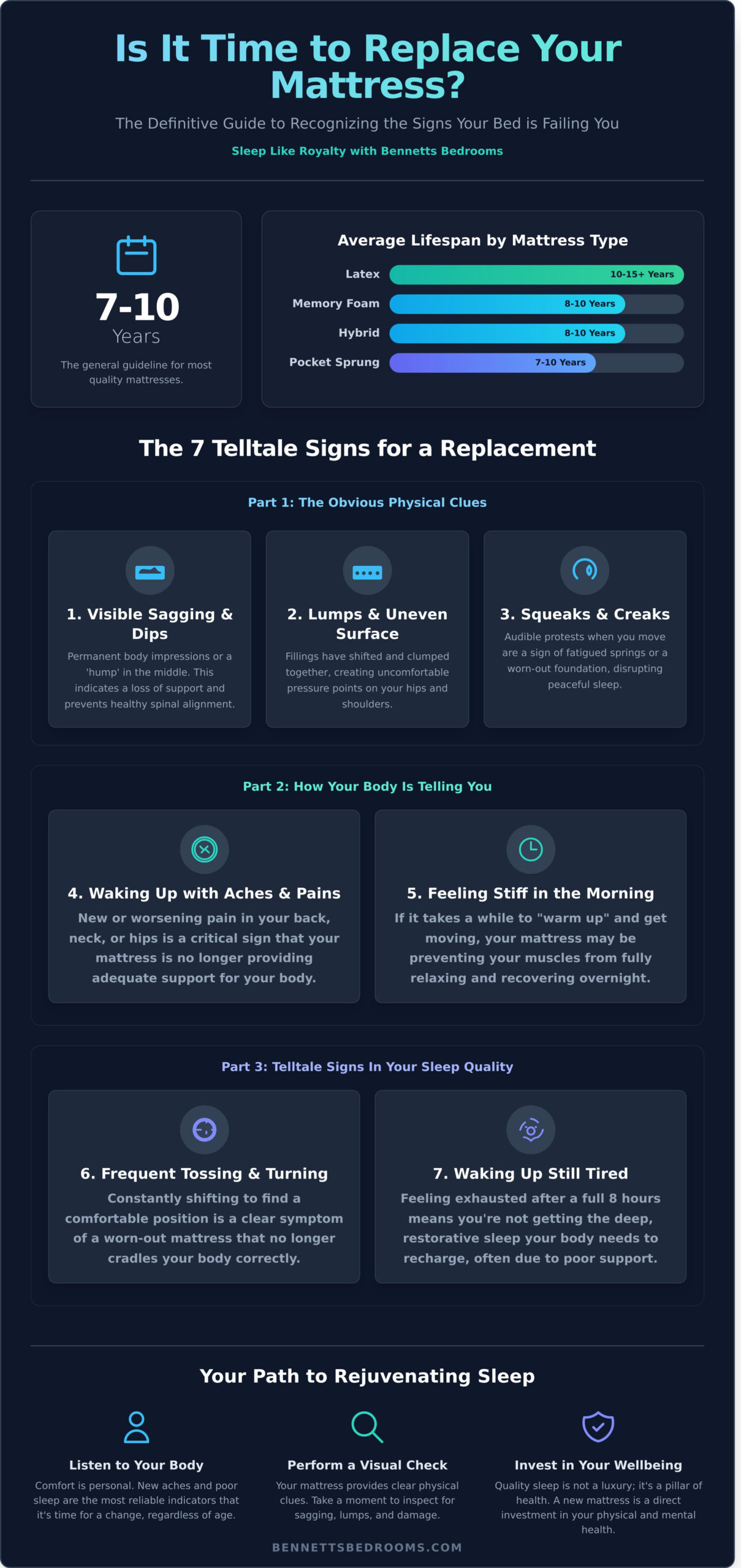
As sleep specialists, we believe that achieving your best sleep begins with understanding your foundation: the mattress. One of the most common questions we hear is, “how often should I replace my mattress?” While the industry standard suggests a new mattress every 7 to 10 years, this is more of a guideline than a strict rule. The true answer to when to replace mattress lies not just on the calendar, but in the quality of your sleep and the visible condition of your bed. A premium, well-cared-for mattress can offer luxurious comfort beyond a decade, while a lower-quality one may show signs of wear much sooner. This section will help you look beyond the age and listen to what your body and your bed are telling you.
To better understand the key signs of a worn-out mattress, this video offers some helpful expert tips:
Why Age Matters: The Invisible Breakdown
Over years of nightly use, the materials inside your mattress inevitably begin to degrade, even if it looks fine on the surface. Supportive foams lose their resilience and ability to bounce back, creating permanent body impressions. The premium steel coils in a spring system can lose tension, leading to sagging and a loss of crucial spinal alignment. More than just comfort is at stake; your mattress also accumulates a significant amount of dead skin cells, body oils, and dust mites. This invisible breakdown not only compromises the support needed for restorative sleep but also impacts the overall hygiene of your sleep environment.
Different Mattresses, Different Timelines
The lifespan of your bed is heavily influenced by its construction and the quality of its components. Understanding the general timelines for the different types of mattresses is key to knowing when to replace mattress models like yours. For instance:
- Pocket Sprung: 7-10 years. Premium models with high-gauge steel and natural fillings often last longer.
- Memory Foam: 8-10 years. High-density, quality foams are less prone to premature sagging.
- Latex: 10-15+ years. Natural latex is renowned for its exceptional durability and resilience.
- Hybrid: 8-10 years, combining the benefits and lifespans of high-quality foam and pocket springs.
Ultimately, investing in a handmade, premium mattress from a trusted brand and performing regular care-such as using a mattress protector and rotating it periodically-can significantly extend its life and performance. The most important takeaway is to listen to your body; waking up with aches or feeling unrested are clear signs it’s time for a change.
Sign 1-3: The Obvious Physical Clues Your Mattress is Failing
While the 8-year rule is an excellent guideline, your mattress often provides clear, physical evidence when its time is up. Before you even consider how you feel in the morning, the mattress itself can tell you everything you need to know. We encourage you to strip your bed completely and conduct a simple visual and tactile inspection. These signs aren’t just cosmetic; they point to a fundamental loss of structural integrity, directly impacting the quality of your rest.
Visible Sagging, Dips, or Body Impressions
The most unmistakable sign of a worn-out mattress is a permanent indentation where you sleep. After years of supporting your body weight, the materials fatigue and can no longer spring back to their original shape. On a shared bed, this often creates a noticeable ‘ridge’ or hump in the middle, forcing both sleepers to roll towards their respective dips. This visible sag is one of the clearest indicators for when to replace mattress, as it prevents your spine from maintaining a neutral, healthy alignment throughout the night.
Lumps, Bumps, and Uneven Surfaces
Run your hands over the surface of your mattress. Does it feel smooth and uniform, or can you detect lumps and bumps beneath the fabric? This often happens when the internal fillings-whether fibre, wool, or foam layers-begin to shift and clump together over time. An uneven surface creates inconsistent support and uncomfortable pressure points on your hips and shoulders, preventing the deep, restorative sleep your body needs to recover.
Audible Squeaks, Creaks, and Crunches
Your bed should be a silent sanctuary for sleep, not a source of disruptive noise. If your mattress protests with a squeak, creak, or crunch every time you shift positions, it’s a clear cry for help. This is most common in traditional innerspring mattresses and signifies that the metal coils have lost their resilience and are wearing out. This isn’t just a minor annoyance; it’s an audible signal that the core support system is failing. As noted in the comprehensive Sleep Foundation guide to mattress replacement, noisy springs are a key indicator that the essential components have worn out and can no longer provide consistent, quiet support.
Sign 4-5: How Your Body is Telling You It’s Time for a Change
While visible wear and tear can be a clear indicator, the most definitive answer to the question of when to replace mattress components often comes directly from your own body. A premium mattress is an investment in your well-being; its primary purpose is to alleviate pressure and promote restorative sleep, not to create discomfort. If you’re consistently waking up feeling worse than when you went to bed, your body is sending a crucial signal that it’s time for a change. Listening to this feedback is paramount for protecting your long-term health and sleep quality.
Waking Up with New Aches and Pains
Do you start your day with a stiff neck, sore shoulders, or a nagging pain in your lower back? This is one of the most common signs of a failing mattress. Over time, the materials in your mattress degrade, losing their ability to provide the essential support your body needs. This leads to poor sleep posture and a misaligned spine, causing you to wake up with aches that weren’t there before. According to expert guidelines on mattress replacement, this lack of support is a critical warning sign. If you find the pain subsides after you get up and stretch, your mattress is almost certainly the culprit.
Increased Allergy or Asthma Symptoms
Your mattress can become a significant reservoir for allergens over its lifespan. With each passing year, it accumulates millions of dust mites, dead skin cells, mould, and other irritants that can wreak havoc on your respiratory system. This is a serious health and hygiene concern that goes far beyond simple comfort. If you notice a consistent pattern of waking up with symptoms such as:
- Persistent sneezing or a runny nose
- Itchy, watery eyes
- Increased breathing difficulties or asthma flare-ups
…it may be the allergens in your old mattress that are to blame. A clean, modern mattress is fundamental to a healthy sleep environment. Explore our range of hypoallergenic mattresses for a healthier sleep.
Sign 6-7: The Telltale Signs in Your Sleep Quality
Beyond the visible wear and tear, some of the most crucial signs your mattress needs replacing are more subtle. Your body and mind are remarkably adept at signalling when your rest is no longer restorative. While it can be easy to dismiss a restless night or morning grogginess, these patterns are often your first and most important warnings. Listening to them is key to understanding when to replace mattress for optimal health.
Investing in a premium, handmade mattress is an investment in your daily energy, your mood, and your overall quality of life. It’s the foundation for waking up feeling truly refreshed and ready to embrace the day.
You Toss and Turn or Struggle to Get Comfortable
Do you spend your nights shuffling, flipping your pillow, and struggling to find that one perfect position? This isn’t just restlessness; it’s a clear signal from your body. An ageing mattress loses its ability to relieve pressure points and provide consistent support. This constant shifting prevents you from sinking into the deep, restorative sleep cycles essential for physical and mental recovery, leaving you feeling tired no matter how long you were in bed.
You Sleep Better in Other Beds (Hotels, Guest Rooms)
This is the ultimate litmus test for your mattress. If you find that a night in a quality hotel or even a friend’s guest room leaves you feeling noticeably more rested and free from aches, the verdict is clear: your bed is the problem. It’s a definitive sign that you’ve slowly become accustomed to inadequate support at home. A truly peaceful night’s sleep shouldn’t be a luxury reserved for holidays; it should be your nightly standard.
Don’t settle for substandard rest. If these signs feel familiar, it’s time to reclaim your right to a perfect night’s sleep. Our team of sleep specialists can help you discover the ideal foundation to ensure you Sleep Like Royalty, every single night.
What to Do When It’s Time: Choosing Your Next Mattress
Recognising the signs that your mattress has reached the end of its life is the first crucial step towards better sleep. Now that you understand when to replace mattress, you can move forward with confidence. View this not as a chore, but as a significant investment in your health, energy, and overall quality of life. A premium mattress is the foundation upon which restful nights and productive days are built, and choosing the right one is a journey we are here to guide you on.
Don’t Make the Same Mistake Twice: Assess Your Needs
Your sleep needs may have changed over the last eight years. Before you purchase a direct replacement, take a moment to assess what you truly need for an ultra-relaxing sleep. Considering these factors ensures your new mattress is a perfect match for you today:
- Your Sleeping Position: Are you a side, back, or stomach sleeper? Each position requires different levels of support to maintain proper spinal alignment.
- Firmness and Body Weight: Your weight influences how a mattress feels. A firmness level that supports a lighter person may feel too soft for someone heavier, and vice-versa.
- Personal Comfort: Do you often wake up too hot? Do you suffer from allergies or specific aches and pains? Modern mattresses offer solutions like cooling technologies and hypoallergenic materials.
Making a Smart Investment in Quality Sleep
While it can be tempting to choose a lower-cost option, a high-quality, handmade mattress is a far better long-term investment. Premium materials, such as high-density memory foam, pocket springs, and luxurious natural fibres like wool and cotton, provide superior durability, breathability, and unparalleled support. This quality not only extends the life of your mattress but transforms your sleep experience. The best way to appreciate this difference is to experience it firsthand. We believe there is no substitute for trying a bed in person.
Our team of sleep specialists is dedicated to helping you find the perfect foundation for your best sleep. Visit our showroom in the Algarve to find your perfect bed.
Invest in Your Rest: Your Royal Upgrade Awaits
Recognising the signs-from a visibly sagging surface to waking with new aches and pains-is the first step towards reclaiming your nights. While the seven-year mark is a useful guide, understanding when to replace mattress is ultimately about listening to the clear signals your body and bed are sending. An old, unsupportive mattress doesn’t just affect your sleep; it impacts your energy, mood, and overall well-being.
Making the decision to invest in quality sleep is a commitment to a better you. Our UK & Portugal Sleep Specialists are here to provide expert advice, guiding you through our curated collection of premium, handmade beds from the world’s leading brands. With fast delivery and professional installation across the Algarve, your journey to restorative sleep is seamless. Don’t settle for another restless night.
Speak with our Sleep Specialists and discover your perfect mattress today. It’s time to sleep like royalty.
Frequently Asked Questions
Can a mattress topper fix a sagging mattress?
A mattress topper is a temporary measure, not a permanent fix for a sagging mattress. While it can add a surface layer of comfort, it cannot restore the failing support structure underneath. Sagging is a critical indicator of when to replace a mattress because it means your spine is no longer properly aligned. For a truly restorative sleep, replacing the mattress is the only way to regain the essential support your body requires for a peaceful night.
How long does a memory foam mattress typically last compared to a pocket sprung one?
A premium, high-density memory foam mattress can last between 8-10 years, offering exceptional pressure relief. In comparison, a high-quality handmade pocket sprung mattress, like those from our luxury UK brands, can often last even longer, sometimes up to 10-12 years, due to their durable construction. Ultimately, the quality of the materials is the most important factor, and our sleep specialists can help you choose the best long-term investment for your comfort.
Does my mattress warranty cover sagging?
Most quality mattress warranties cover significant sagging, but the terms are very specific. Typically, an indentation must reach a certain depth (e.g., 2-4cm) without anyone on it to be considered a manufacturing defect. Normal body impressions are not usually covered. It is crucial to read the warranty details and use a proper supportive base, as an incorrect foundation can void the warranty. Our team can clarify the warranty for any model we sell.
What is the best way to dispose of my old mattress in Portugal?
In Portugal, many local councils (Câmaras Municipais) offer a free collection service for large household items, often called “monos.” You simply need to contact them to schedule a pickup. For ultimate convenience, when you purchase a new luxury mattress from Bennetts Bedrooms, we offer a removal and disposal service for a small fee. This ensures your old mattress is handled responsibly, saving you the time and effort.
How do I know what mattress firmness is right for me?
The ideal firmness depends on your sleeping position, body weight, and personal preference. Side sleepers often benefit from a softer to medium mattress to cushion the shoulders and hips. Back and stomach sleepers typically require a medium-firm to firm surface for proper spinal alignment. As sleep specialists, we highly recommend visiting our showroom to test different options and receive expert advice tailored to your unique needs for a truly restorative sleep experience.
Will a new mattress feel uncomfortable at first?
It is quite common for a new mattress to feel different, or even a bit firm, for the first few weeks. This is a normal adjustment period as your body gets used to the new level of support and the mattress materials “break in.” We recommend giving your new mattress at least 30 nights to fully adapt. This allows the premium fillings to settle and conform to your body, paving the way for years of luxurious, comfortable sleep.
