
 Beds
Beds
 Accessories

Does the promise of eight hours in bed feel hollow when you still wake up feeling completely exhausted? If you’re tired of battling to fall asleep, struggling through the day feeling irritable, and wading through conflicting advice, you are not alone. As sleep specialists, we believe that achieving truly restorative rest shouldn’t be a mystery. This is your definitive guide to finally understanding how to improve sleep quality and transform your relationship with sleep, moving beyond simply counting hours to making every moment of rest count.
Forget temporary fixes and confusing jargon. In this article, we’ll provide a clear, expert-backed action plan to help you reclaim your nights. You will discover practical, sustainable strategies to optimise your sleep environment, fine-tune your daily routine, and make simple lifestyle adjustments that lead to profound results. Prepare to unlock the secrets to a peaceful, ultra-relaxing sleep and wake up feeling genuinely energetic, focused, and ready to embrace your day. It’s time to achieve the quality of rest you deserve.
Key Takeaways
- Transform your bedroom into a true sanctuary for sleep by optimising key sensory elements like light, sound, and comfort.
- Master your body’s internal clock with a consistent evening routine that signals it’s time to unwind for deep, restorative rest.
- Learn how the timing of your meals, workouts, and a simple mindfulness practice can dramatically improve sleep quality.
- While lifestyle habits are vital, the foundation of a peaceful night lies in your primary tool for rest: your bed and mattress.
Optimising Your Sleep Environment: The Foundation of Restful Nights
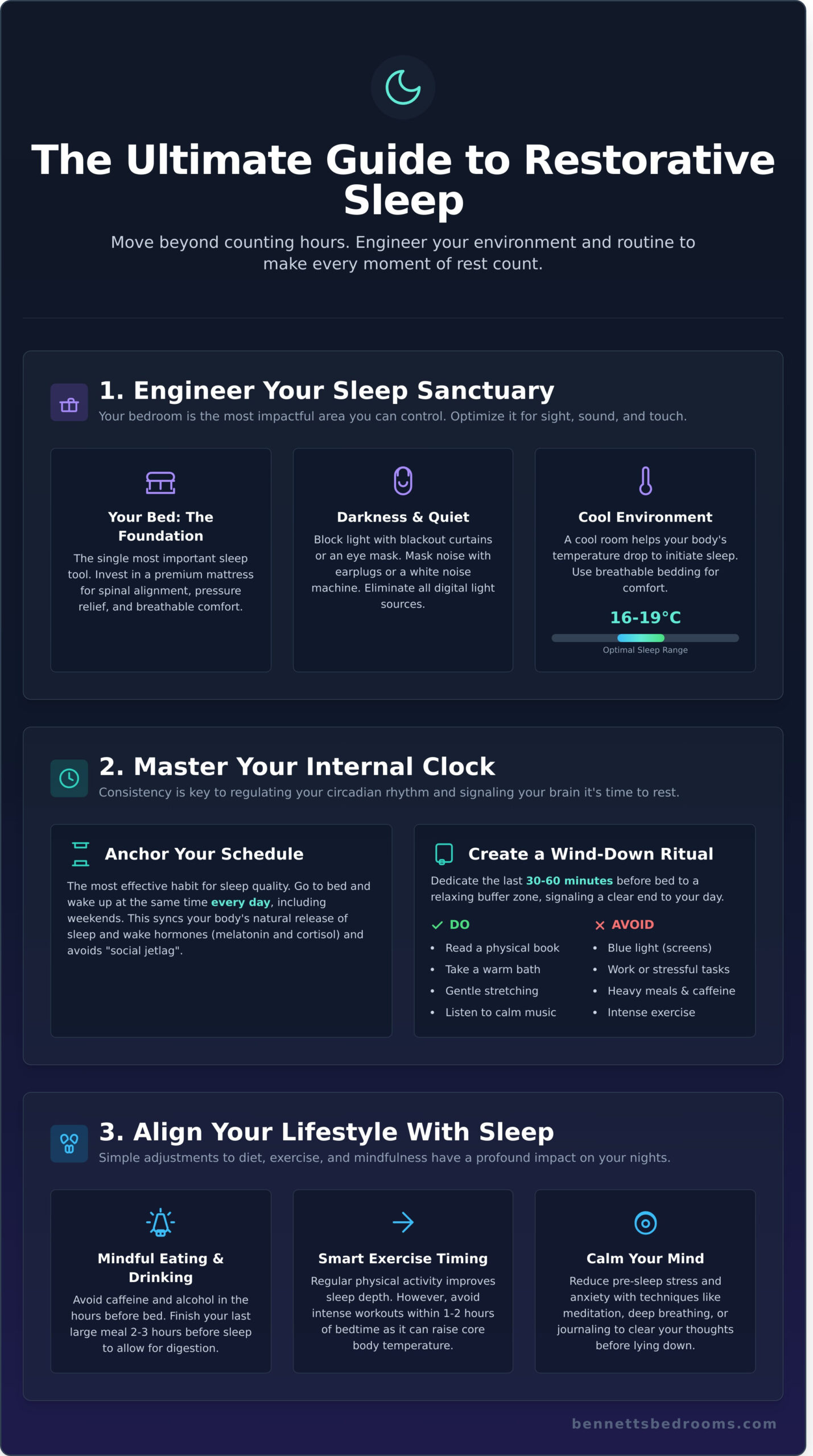
Before exploring sleep cycles or daily habits, the most direct and impactful area you can control is your bedroom itself. Transforming this space into a sanctuary dedicated purely to rest is the first, crucial step to improve sleep quality. The simple, actionable changes you make to your environment, often referred to as good sleep hygiene, lay the foundation for deeper, more restorative nights. By focusing on three key senses-sight, touch, and hearing-you can craft an atmosphere that signals to your body and mind that it’s time for profound rest.
To see how these environmental factors come together, watch this insightful video on boosting your sleep quality:
The Crucial Role of Your Mattress and Bedding
Your mattress is the single most important sleep tool you own. It’s the surface where you spend a third of your life, making its quality non-negotiable. A premium mattress should do more than just feel comfortable; it must provide essential support to maintain spinal alignment and relieve pressure points on your hips and shoulders. Your pillows are equally vital, ensuring your neck and head are correctly positioned. Complete this foundation with high-quality linens made from breathable, natural materials like cotton or linen for an ultra-relaxing sleep experience.
Create a Sanctuary of Darkness and Quiet
Exposure to light, especially the blue light from electronics, suppresses your body’s production of melatonin, the hormone that regulates sleep. To create a truly dark environment, invest in blackout curtains or a comfortable eye mask. For sound, which can easily disrupt sleep, consider using earplugs or a white noise machine to mask sudden noises. Finally, ensure your room is free from digital distractions by covering or removing all light-emitting devices like clocks, chargers, and televisions.
Finding Your Ideal Sleep Temperature
A cool room is scientifically proven to help you fall asleep faster and achieve deeper rest. This is because your core body temperature naturally drops to initiate sleep. The ideal range for a bedroom is typically between 16-19°C. You can achieve this with air conditioning or an open window, depending on the climate in Portugal. Using layered bedding allows for easy adjustments, while a modern, breathable mattress will help dissipate body heat instead of trapping it, ensuring you remain comfortable all night long.
Mastering Your Routine: The Power of Consistent Sleep Hygiene
While a premium, handmade bed provides the perfect foundation for rest, your daily habits orchestrate the journey to deep, restorative sleep. Your body operates on a delicate internal clock, known as the circadian rhythm, which thrives on predictability. By establishing a consistent routine, you send powerful signals to your brain that it’s time to wind down, transitioning seamlessly from a demanding day to a peaceful night. Mastering this process is fundamental if you want to truly improve sleep quality and unlock your full potential.
The Importance of a Consistent Sleep Schedule
The single most effective way to anchor your circadian rhythm is to go to bed and wake up at the same time every day-even on weekends. Resisting the urge to sleep in avoids “social jetlag,” a state that disrupts the natural release of hormones like melatonin (which makes you sleepy) and cortisol (which manages alertness). A regular schedule creates a powerful feedback loop, training your body to feel tired and awake at the correct times.
Designing a Relaxing Pre-Sleep Ritual
Think of the last 30-60 minutes before bed as a luxurious buffer zone. This is your time to disconnect from stress and prepare your mind for rest. A successful ritual is personal and calming, signalling a clear end to your day. Consider incorporating activities such as:
- Reading a physical book under soft light
- Taking a warm bath with Epsom salts
- Practicing gentle stretching or meditation
- Listening to calming music or a sleep podcast
During this time, it’s crucial to avoid stimulating tasks, stressful conversations, or work-related emails. This ritual is a cornerstone of good sleep hygiene, and it works best when supported by a healthy lifestyle. As leading sleep specialists often note, it’s vital to understand how diet and exercise impact sleep, highlighting the connection between our daily habits and nightly rest.
What to Do When You Can’t Fall Asleep
Even with the perfect routine, occasional sleeplessness can occur. The key is to respond with a calm strategy, not anxiety. If you find yourself awake for more than 20 minutes, don’t toss and turn. Instead, get out of bed and go to another room. Do something quiet and relaxing in dim light, like reading or listening to music, until you feel genuinely sleepy. Return to bed only when you are ready to sleep. Above all, avoid watching the clock, as this can increase stress and make it even harder to drift off.
The Body-Sleep Connection: How Diet and Exercise Impact Your Rest
While a premium mattress is the foundation of restorative rest, your daily habits play an equally crucial role. What you consume and how you move your body directly influences your sleep architecture-the natural cycle of sleep stages you experience each night. Understanding this connection is key to unlocking a truly peaceful night’s sleep. Simple, conscious adjustments to your diet and exercise routine can prevent disruptive awakenings and significantly improve sleep quality.
Foods and Drinks That Promote (or Prevent) Sleep
Timing and type are everything when it comes to pre-bedtime consumption. Your digestive system needs time to rest, just like the rest of your body. To ensure it isn’t working overtime while you’re trying to sleep, it’s wise to be mindful of what-and when-you eat and drink.
- Avoid Heavy Meals: Finish large, rich, or spicy meals at least two to three hours before bed to prevent indigestion and discomfort from disrupting your rest.
- Limit Caffeine & Alcohol: Caffeine can linger in your system for hours, so it’s best to avoid it after 2 PM. While alcohol may induce drowsiness, it fragments the sleep cycle later in the night, leading to lower-quality rest.
- Choose Sleep-Promoting Snacks: If you feel hungry before bed, opt for a light snack rich in sleep-supporting nutrients, such as a small handful of almonds, walnuts, or tart cherries.
The Link Between Exercise and Sleep Quality
Regular physical activity is one of the most effective natural tools you can use to improve sleep quality. Exercise helps regulate your body’s internal clock, reduces stress, and can increase the amount of time you spend in deep, restorative sleep. As supported by extensive research outlined in this comprehensive NIH guide to better sleep, consistency is often more important than intensity. However, timing your workout is critical to avoid interfering with your ability to wind down.
- Aim for Consistency: Strive for at least 30 minutes of moderate activity, like a brisk walk or cycling, on most days of the week.
- Watch the Clock: Finish any vigorous workouts at least two to three hours before your bedtime. This allows your body temperature and heart rate to return to normal.
- Embrace the Morning: Exercising in the morning or afternoon is often considered ideal, as it can help energise you for the day and prepare your body for a restful night.
Calming Your Mind: Techniques to Reduce Pre-Sleep Stress and Anxiety
Even the most luxurious, handmade bed cannot guarantee rest if your mind is running a marathon. In our modern, fast-paced world, a racing mind is one of the biggest barriers to achieving deep, restorative sleep. The constant stimulation from work, technology, and daily responsibilities keeps our brains in an active state long after our heads hit the pillow. The goal is to create a pre-sleep ritual that signals to your mind that it’s time to unwind, detach from the day’s worries, and transition into a peaceful state ready for an ultra-relaxing night.
The Digital Detox: Why Screens Disrupt Sleep
Our devices are a primary culprit in sleep disruption. The blue light emitted from phones, tablets, and laptops inhibits your body’s production of melatonin, the crucial hormone that regulates your sleep-wake cycle. Beyond the light, the content itself-from social media to breaking news-keeps your brain in a state of high alert. To counteract this, establish a ‘screen-free’ buffer zone of at least 60 minutes before bed and make a habit of charging your devices outside of the bedroom.
Mindfulness and Relaxation Techniques for Sleep
Calming your nervous system is essential for a peaceful night. These simple practices, which can be performed from the comfort of your bed, can make a significant difference in quieting your mind:
- Deep Breathing: Inhale slowly through your nose for four counts, hold your breath for seven counts, and exhale slowly through your mouth for eight counts. Repeat this several times to lower your heart rate and ease anxiety.
- Guided Meditation: Use a sleep-focused audio app to follow a calming narrative that guides your mind away from stressful thoughts and into a state of deep relaxation.
- Progressive Muscle Relaxation: Starting with your toes and working your way up to your forehead, systematically tense and then release each muscle group to dissolve physical tension held in the body.
Journaling to Clear Your Mind
Putting pen to paper is a powerful and effective way to ‘offload’ your brain before sleep. Dedicate just five to ten minutes to writing before you turn out the lights. A ‘brain dump’ of any lingering worries or anxieties can provide significant mental relief. Alternatively, creating a simple to-do list for the next day can prevent late-night planning. For a more positive focus, a gratitude journal helps shift your mindset from stress to contentment, paving the way for rest.
As sleep specialists, we know that combining these calming techniques with the physical comfort of a premium bed is the ultimate strategy to improve sleep quality and truly sleep like royalty.
Your Bed is Your Sanctuary: Investing in Your Sleep Quality
You can perfect your evening routine, limit screen time, and practice mindfulness, but if the surface you sleep on is failing you, your efforts may be in vain. Think of your bed as the most essential tool in your wellness toolkit. A worn-out or unsuitable mattress can actively work against your body, undoing all your good habits and preventing the deep, restorative rest you need. Investing in premium, handmade sleep products is not a luxury; it is a direct investment in your long-term health, energy, and happiness.
Understanding when and how to choose the right foundation for your rest is the final, crucial piece of the puzzle. When you align your sleep environment with your body’s needs, you create the perfect conditions to genuinely improve sleep quality and wake up feeling revitalised.
When to Know It’s Time for a New Mattress
Even the highest quality mattress has a finite lifespan. As a general guide, most mattresses should be replaced every 7-10 years. Beyond age, your body and your bed will give you clear signals that it’s time for a change. Look for these tell-tale signs:
- Visible Wear and Tear: Are there noticeable sags, dips, or permanent body impressions where you sleep? Can you feel lumps or the springs beneath the surface?
- Waking with Aches and Pains: If you consistently wake up with stiffness, back pain, or sore joints that ease as you move around, your mattress is likely no longer providing adequate support.
- The “Hotel Bed” Effect: Do you find yourself getting a significantly more peaceful night’s sleep in other beds, such as at a friend’s house or a hotel? This is a strong indicator that your bed at home is the problem.
Choosing the Right Bed for Your Needs
Selecting a new bed is a highly personal decision. The perfect mattress for one person may be completely wrong for another. Key factors, such as your primary sleeping position-whether you’re a side, back, or stomach sleeper-determine the level of firmness and support you require for proper spinal alignment. The materials also play a vital role, from the contouring comfort of memory foam to the responsive support of pocket sprung systems or the breathable luxury of natural fibres. Finally, remember that a quality bed base is essential; it supports your mattress and ensures its optimal performance and longevity.
Navigating these choices can feel overwhelming, but you don’t have to do it alone. Let our Sleep Specialists help you find your perfect bed.
Your Journey to Waking Up Refreshed Starts Now
Transforming your nights from restless to restorative is well within your reach. By mastering your daily routines, optimising your sleep environment, and creating a calm mindset, you build a powerful foundation for rest. Every consistent adjustment you make is a significant step forward. Committing to these practices is the most effective way to improve sleep quality for a more energised and vibrant life.
While these habits are crucial, the cornerstone of your sleep sanctuary is the bed you sleep in. As the Algarve’s premier Sleep Specialists, we understand that the right mattress is not a luxury, but an essential investment in your well-being. Our curated collection of handmade British and Portuguese beds is NBF ‘Big Tick’ approved, guaranteeing the highest standards of safety and quality. Discover the foundation of great sleep with our premium beds and mattresses.
Your path to better mornings and more productive days is clear. Invest in your rest and begin your journey to sleeping like royalty tonight.
Frequently Asked Questions About Sleep Quality
How many hours of sleep do I really need per night?
For most adults, the ideal amount of sleep is between 7 to 9 hours per night. This duration allows your body and mind to complete all essential sleep cycles, which are crucial for physical repair, memory consolidation, and emotional regulation. While individual needs can vary slightly, consistently achieving this amount is a foundational step toward feeling rested, focused, and healthy. Prioritising this window is an investment in your daily performance and long-term well-being.
Can I ‘catch up’ on sleep during the weekend?
While sleeping in on a weekend can help alleviate some fatigue, it cannot fully erase a weekly sleep debt. A consistent sleep schedule is far more effective for regulating your body’s internal clock, or circadian rhythm. Relying on weekend lie-ins can disrupt this rhythm, making it harder to wake up on Monday morning. The best strategy to improve sleep quality is to aim for consistent sleep and wake times every day for truly restorative rest.
Why do I keep waking up in the middle of the night?
Frequent nightly awakenings can stem from several issues. A primary physical cause is often an uncomfortable or unsupportive mattress that creates pressure points or causes you to overheat. Other common culprits include stress, consuming caffeine or alcohol too close to bedtime, or a bedroom that is too bright or noisy. Evaluating your sleep environment, especially the quality and comfort of your bed, is a crucial step toward achieving uninterrupted sleep.
How long should it take to fall asleep?
A healthy sleep latency-the time it takes to fall asleep-is typically between 10 and 20 minutes. If you drift off the moment your head hits the pillow, you may be sleep-deprived. Conversely, if you regularly lie awake for more than 30 minutes, it could be a sign of insomnia or anxiety. Creating a calm, comfortable sanctuary in your bedroom is key to helping your body relax and transition smoothly into a peaceful night’s sleep.
Are sleep trackers accurate and can they help improve sleep?
Sleep trackers are excellent for monitoring trends, such as your total sleep time and consistency. They can motivate you to build healthier habits by providing data on your routines. However, most consumer-grade trackers are not medically precise, especially when measuring specific sleep stages like deep or REM sleep. Use them as a helpful guide, but always prioritise how you feel in the morning as the truest indicator of a good night’s rest.
Does what I eat for dinner affect how I sleep?
Yes, your evening meal has a direct impact on your sleep. Eating a large, spicy, or fatty meal too close to bedtime can cause indigestion and discomfort that disrupts rest. Likewise, stimulants like caffeine or alcohol can interfere with your natural sleep cycles. For optimal sleep, try to finish your dinner at least 2-3 hours before bed and choose lighter, more easily digestible foods to prepare your body for a restorative night.
