
 Beds
Beds
 Accessories

Waking up with a stiff, aching back is an exhausting way to begin any day. You deserve to feel restored and ready for what lies ahead, not as if you’ve spent the night in discomfort. If this experience is all too familiar, your thoughts have likely turned to finding the best orthopedic mattress for back pain. Yet, the search itself can be a source of stress. Faced with confusing terminology, endless options, and the fear of making a costly mistake on a mattress that doesn’t help, it’s easy to feel overwhelmed and unsure where to turn.
As sleep specialists, we are here to provide clarity and confidence. We believe that choosing the right mattress is a vital investment in your long-term health and well-being. This expert guide will demystify the process, explaining exactly what makes a mattress truly orthopedic and how to match its features-from premium materials to the perfect firmness-to your specific needs. Prepare to leave the confusion behind and learn how to select the ideal mattress that promises not just comfort, but a future of restorative, pain-free sleep.
Key Takeaways
- The foundation of a pain-free morning is correct spinal alignment. Learn how your mattress’s internal support system is the key to achieving this.
- Don’t just focus on firmness; the ideal orthopedic mattress for back pain masterfully balances a supportive core with the right comfort layers for pressure relief.
- There is no single “best” mattress for everyone. Your unique sleeping position and body type are the most important factors in finding your perfect match.
- A quality mattress is the cornerstone of a healthy back, but it’s not the only piece. Discover simple adjustments to your sleep environment that can make a significant difference.
The Science of Sleep: How Your Mattress Impacts Back Pain
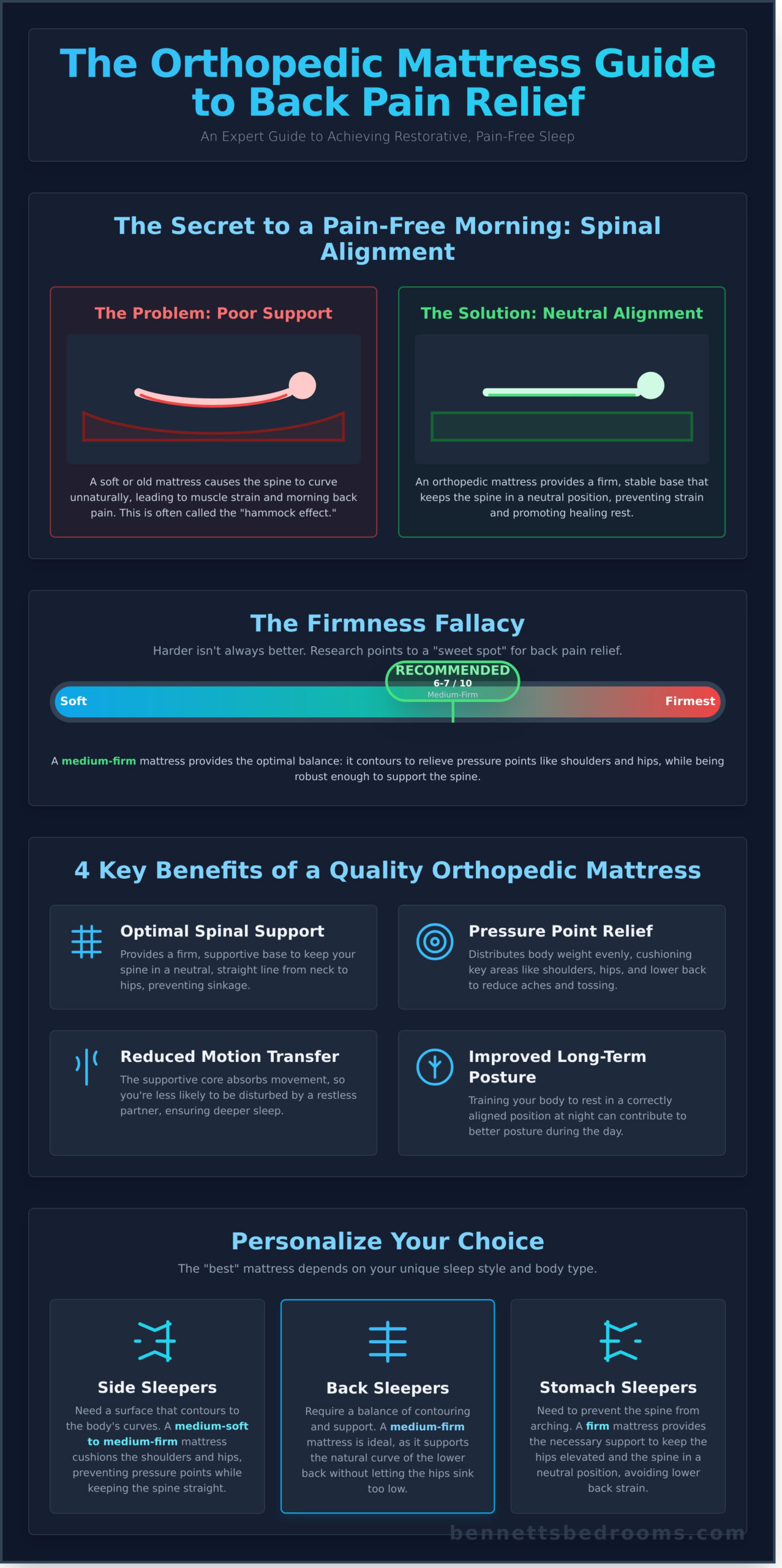
Waking up with a stiff, aching back is a frustratingly common experience that can ruin your day before it even begins. While many factors can contribute to back pain, one of the most significant culprits is often hiding in plain sight: your mattress. During our eight hours of nightly rest, our bodies need a supportive surface to maintain proper spinal alignment. A mattress that is too soft, too old, or simply unsuitable for your body type can cause your spine to curve unnaturally, straining muscles and joints throughout the night and leaving you in pain by morning.
As sleep specialists, we believe in empowering you with knowledge. To better understand how to select the right surface for your needs, this video from a leading physiotherapist offers expert insights:
This is where the concept of an orthopedic mattress for back pain comes in. It’s a solution specifically engineered to provide the robust support necessary for a healthy, restorative sleep posture. It works by creating a firm, stable foundation that prevents your spine from falling out of its neutral position.
What is an Orthopedic Mattress, Really?
There’s a common misconception that “orthopedic” is just another word for “extra-firm” or uncomfortably hard. This isn’t the case. While the history of orthopedic mattresses shows the term isn’t medically regulated, in the premium bedding industry it refers to a mattress engineered to support the joints, back, and overall body. Its primary function is to promote a healthy sleeping posture by providing targeted, differential support that conforms to your body’s natural curves, keeping your spine perfectly aligned from your neck to your hips.
Key Benefits for Back Pain Sufferers
Choosing a quality orthopedic mattress provides a wealth of benefits that extend far beyond the bedroom. Here are the key advantages for those seeking relief from back pain:
- Optimal Support and Spinal Alignment: A premium orthopedic mattress provides a firm, supportive base that prevents the heavier parts of your body, like your hips, from sinking too deeply. This avoids the dreaded “hammock effect” and keeps your spine in a neutral, straight line.
- Pressure Point Relief: By distributing your body weight evenly across the surface, these mattresses cushion key pressure points such as the shoulders, hips, and lower back. This reduces tossing and turning and alleviates targeted aches.
- Reduced Motion Transfer: The high-quality support core in an orthopedic mattress absorbs movement, meaning you’re less likely to be disturbed by a restless partner, ensuring a more peaceful and uninterrupted night’s sleep.
- Improved Long-Term Posture: By training your body to rest in a correctly aligned position for hours each night, an orthopedic mattress can contribute to better posture during your waking hours, reducing daytime strain and discomfort.
Choosing Your Support System: Key Features of an Orthopedic Mattress
Choosing the perfect orthopedic mattress for back pain is about understanding its architecture. A premium mattress is not a single block of material but a sophisticated system, combining a robust support core with luxurious comfort layers. The materials you choose directly influence the mattress’s ability to align your spine, relieve pressure points, and provide lasting durability. As sleep specialists, we are here to guide you through the essential components that define superior support and comfort.
The Firmness Fallacy: Finding Your Perfect Level
For years, the common advice was that a rock-hard mattress was best for back pain. We now know this ‘firmness fallacy’ can create more pressure and discomfort. On a scale of 1 (softest) to 10 (firmest), a medium-firm mattress (typically a 6-7) is overwhelmingly recommended. This isn’t just our expert opinion; extensive research on bedding systems and back pain confirms that medium-firm surfaces significantly reduce pain. This level provides enough contouring to cushion your hips and shoulders while offering robust support to keep your spine aligned. Remember, firmness is subjective-your body weight will influence how a mattress feels.
Core Materials: The Foundation of Support
The support core is the engine of your mattress, providing foundational stability and preventing the dreaded ‘hammock effect’ where your midsection sinks too low. A high-quality core is non-negotiable for spinal health. Key types include:
- Pocket Springs: Individually wrapped springs that move independently, contouring precisely to your body’s curves and minimising motion transfer-ideal if you share your bed.
- High-Density Support Foam: A durable, resilient foam base found in premium all-foam and hybrid models, offering consistent, firm support across the entire surface.
- Open Coil Springs: A traditional, interconnected spring system. While budget-friendly, it often provides less targeted support and can be prone to motion transfer.
Comfort Layers: Where Relief Meets Luxury
Sitting atop the core, the comfort layers provide the immediate sense of relief and luxury. This is where pressure-point relief happens, allowing your muscles to fully relax. Premium options include:
- Memory Foam: Renowned for its deep contouring properties, it cradles your body to evenly distribute weight and alleviate pressure on sensitive joints.
- Latex: Offers a more buoyant, responsive support. It’s exceptionally durable, naturally hypoallergenic, and sleeps cooler than traditional memory foam.
- Natural Fillings: Materials like wool and cotton provide a sumptuously soft and breathable surface, excelling at temperature regulation for year-round comfort.
- Gel-Infused Foams: An innovative solution that integrates cooling gel into memory foam, delivering exceptional pressure relief without the risk of overheating.
Personalizing Your Choice: The Best Mattress for Your Sleep Style
Finding the perfect orthopedic mattress for back pain is a deeply personal journey. There is no single “best” mattress that suits everyone; the ideal choice depends entirely on your unique sleeping position and body type. As sleep specialists, we understand that achieving a peaceful night’s sleep means matching a premium mattress to your specific needs. This guide will help you self-diagnose your requirements to make a confident, informed decision.
For Side Sleepers
Side sleeping is the most common position, but it places significant pressure on the hips and shoulders. To maintain spinal alignment, you need a surface that cushions these key points while supporting your waist. We recommend a medium-soft to medium-firm mattress. A quality pocket sprung or hybrid mattress with a memory foam comfort layer excels at providing this crucial pressure relief, contouring to your body’s curves for sublime comfort.
For Back Sleepers
Sleeping on your back makes it easier to keep your spine in a neutral position. The primary goal here is to support the natural curve of your lower back. A medium-firm mattress is typically the gold standard, offering enough support to prevent your hips from sinking too low, which can cause an unhealthy arch. According to expert guidance from institutions like the New York Spine Institute on how to choose a mattress for back pain, maintaining this alignment is critical. Mattresses with zoned support systems provide targeted firmness for your lumbar region, enhancing this effect.
For Stomach Sleepers
While we generally advise against this position as it can strain the neck and spine, we understand it’s a habit for many. If you sleep on your stomach, a medium-firm to firm mattress is essential. This prevents your hips from sinking, which would force your lower back into an unnatural and stressful arch. A responsive surface, such as one with high-quality springs or latex, is often better than slow-sinking memory foam to avoid a “stuck” feeling.
How Body Weight Influences Firmness
Your body weight directly impacts how a mattress feels and performs. The right firmness ensures your spine is properly supported without creating pressure points or sagging. Here is a general guideline to help you select the right orthopedic mattress for back pain:
- Lighter Individuals (under 60kg): A softer mattress (soft to medium) is often required to allow for proper contouring and pressure relief.
- Average Weight Individuals (60kg – 105kg): The industry standard of medium-firm is typically the sweet spot, providing a perfect balance of comfort and support.
- Heavier Individuals (over 105kg): A firmer, more durable mattress (firm to extra-firm) is necessary to provide robust support and prevent excessive sinking.
If you need further personalized advice, our sleep specialists are always here to help you find your perfect match.
Beyond the Mattress: Creating a Holistic Sleep Environment for a Healthy Back
Investing in the right orthopedic mattress for back pain is the most significant step towards a pain-free, restorative night. However, to truly unlock its full potential, it’s essential to consider your entire sleep ecosystem. At Bennetts Bedrooms, our Sleep Specialists believe that a premium mattress is the foundation, but the details surrounding it are what complete the structure of perfect sleep. These simple adjustments can dramatically enhance your comfort and ensure you get the maximum benefit from your investment.
The Role of Your Pillow
Your pillow’s primary role is to maintain neutral alignment between your neck (the cervical spine) and the rest of your back. A mismatch here can cause stiffness and pain, regardless of your mattress quality. The ideal pillow depends entirely on your sleeping position:
- Side Sleepers: Need a thicker, firmer pillow to fill the space between the ear and the shoulder.
- Back Sleepers: Require a medium-loft pillow to support the natural curve of the neck without pushing the head too far forward.
- Stomach Sleepers: Should use a very thin pillow, or none at all, to prevent the neck from arching backwards.
For those needing advanced support, a premium orthopedic pillow can provide targeted contouring for optimal alignment.
Why Your Bed Base Matters
The bed base is the unsung hero of your sleep setup. A worn-out or unsupportive base can cause even the best new mattress to sag prematurely, compromising its supportive qualities. A quality base ensures your mattress performs as designed for its entire lifespan. The two main types in Portugal are:
- Solid (Divan) Bases: Offer firm, uniform support across the entire mattress surface, ideal for those who prefer a sturdier feel.
- Sprung Slatted Bases: Provide a more cushioned and responsive feel, as the slats flex with your body’s movements. Ensure the slats are no more than 7cm apart to provide adequate support.
Knowing When It’s Time for a Change
Even the highest quality mattress has a lifespan, typically around 7-10 years. Recognising the signs of wear is key to protecting your back. If you notice visible sagging or lumps, or you consistently wake up with new aches, your mattress is likely no longer providing the support you need. One of the clearest indicators? If you find yourself sleeping significantly better in other beds, like at a hotel, it’s time to assess your setup at home. Your bed should be your ultimate sanctuary for comfort.
Need advice on your complete bed setup? Talk to our experts.
Your Path to Restorative Sleep and a Healthier Back
Choosing the perfect mattress is a crucial investment in your wellbeing. Remember that the key to alleviating discomfort lies in understanding your personal needs-from your preferred sleeping position to the ideal level of support and firmness. Finding the right orthopedic mattress for back pain isn’t about a one-size-fits-all solution; it’s about discovering your personalized match for truly restorative sleep.
As sleep specialists serving the Algarve, we are here to guide you with expert advice rooted in our UK and Portugal heritage. Our curated collection features only premium, National Bed Federation (NBF) approved mattresses, ensuring the highest standards of quality and safety. We make your transition to better sleep seamless with fast delivery and professional installation, helping you rest easy from the moment your new bed arrives.
Stop letting back pain dictate your days. It’s time to invest in the quality rest you deserve and wake up feeling refreshed and revitalised.
Shop our curated collection of orthopedic mattresses and sleep like royalty.
Frequently Asked Questions
Is a firm or medium-firm mattress better for lower back pain?
While a firm mattress was once the standard advice, our sleep specialists and modern studies now recommend a medium-firm mattress for optimal relief. This tension provides the essential support to maintain healthy spinal alignment without creating undue pressure on your hips and shoulders. It strikes the perfect balance between a supportive foundation and a comfortable, pressure-relieving surface, leading to a more restorative and peaceful night’s sleep for those with lower back pain.
How do I know if my current mattress is causing my back pain?
A key indicator is waking up with stiffness or pain that gradually subsides as you move about your day. Other tell-tale signs include a visible sag or indentation in the centre of your bed, or constantly tossing and turning to find a comfortable spot. A quality mattress offers consistent support for 7-10 years; if yours is older and you’re experiencing these issues, it is likely contributing to your discomfort and should be replaced.
Can a new orthopedic mattress make my back pain worse at first?
It can seem concerning, but it is quite normal to experience a brief adjustment period with some initial discomfort. Your body has grown accustomed to the support-or lack thereof-from your old mattress. A new, correctly supportive orthopedic mattress works to realign your spine into a healthier posture while you sleep. This can engage your muscles differently, which may feel unusual at first but is a positive sign that the mattress is doing its job effectively.
How long does it take for your body to adjust to a new orthopedic mattress?
Every person is unique, but most individuals find their body fully adapts to a new mattress within a 30-day period. This timeframe allows your spine and muscles to get used to the improved support and proper alignment. It also gives the premium, handmade materials within the mattress time to soften slightly and conform to your specific body shape. Patience during this transition is key to unlocking long-term comfort and relief.
What is the main difference between an orthopedic and a memory foam mattress?
The primary difference lies in their core design philosophy. “Orthopedic” describes a mattress engineered specifically for robust spinal and joint support, typically featuring a firmer feel. Memory foam, in contrast, is a specific material prized for its ability to contour to the body, offering exceptional pressure relief. Many of the best orthopedic mattresses for back pain expertly combine these attributes, using supportive springs with a luxurious layer of memory foam for the perfect blend of comfort and care.
Are orthopedic mattresses suitable for all types of back pain?
Orthopedic mattresses are designed to benefit most common types of back pain by providing superior, targeted support. However, the ideal firmness and material composition can depend on the location of your pain, your body weight, and your primary sleeping position. Whether you suffer from lower lumbar aches or upper back tension, there is a solution. As sleep specialists, we can help guide you to the premium mattress that perfectly matches your individual needs for your best sleep.
