
 Beds
Beds
 Accessories

Waking up with a stiff neck or an aching back is a frustrating way to start the day, especially when you’ve had a full night in bed. If you’re tired of feeling unrested, or if issues like snoring and acid reflux disrupt your peace, the cause might be simpler than you think. The secret to transforming your sleep quality often lies in finding the best sleeping position for your body-a fundamental step towards aligning your spine for deep, restorative rest and long-term wellbeing.
As sleep specialists, we believe everyone deserves to wake up feeling revitalised and pain-free. In this definitive guide, we will explore the science behind different sleeping postures, helping you discover the ideal position for your unique needs. More importantly, we’ll reveal the vital connection between your posture and your mattress, showing you how the right premium foundation can help you achieve a truly luxurious, royal-quality sleep. Prepare to transform your nights and awaken your best self every morning.
Key Takeaways
- Discover why sleep specialists consider back sleeping the gold standard for maintaining optimal spinal alignment and reducing neck pain.
- Learn how the world’s most popular position-side sleeping-can improve digestion and reduce snoring for a more peaceful night.
- Understand the risks of stomach sleeping and the simple adjustments you can make to protect your neck and spine from strain.
- Finding the best sleeping position is only half the journey; matching it with the right mattress is the key to unlocking restorative, pain-free sleep.
Back Sleeping: The Royal Treatment for Spinal Alignment
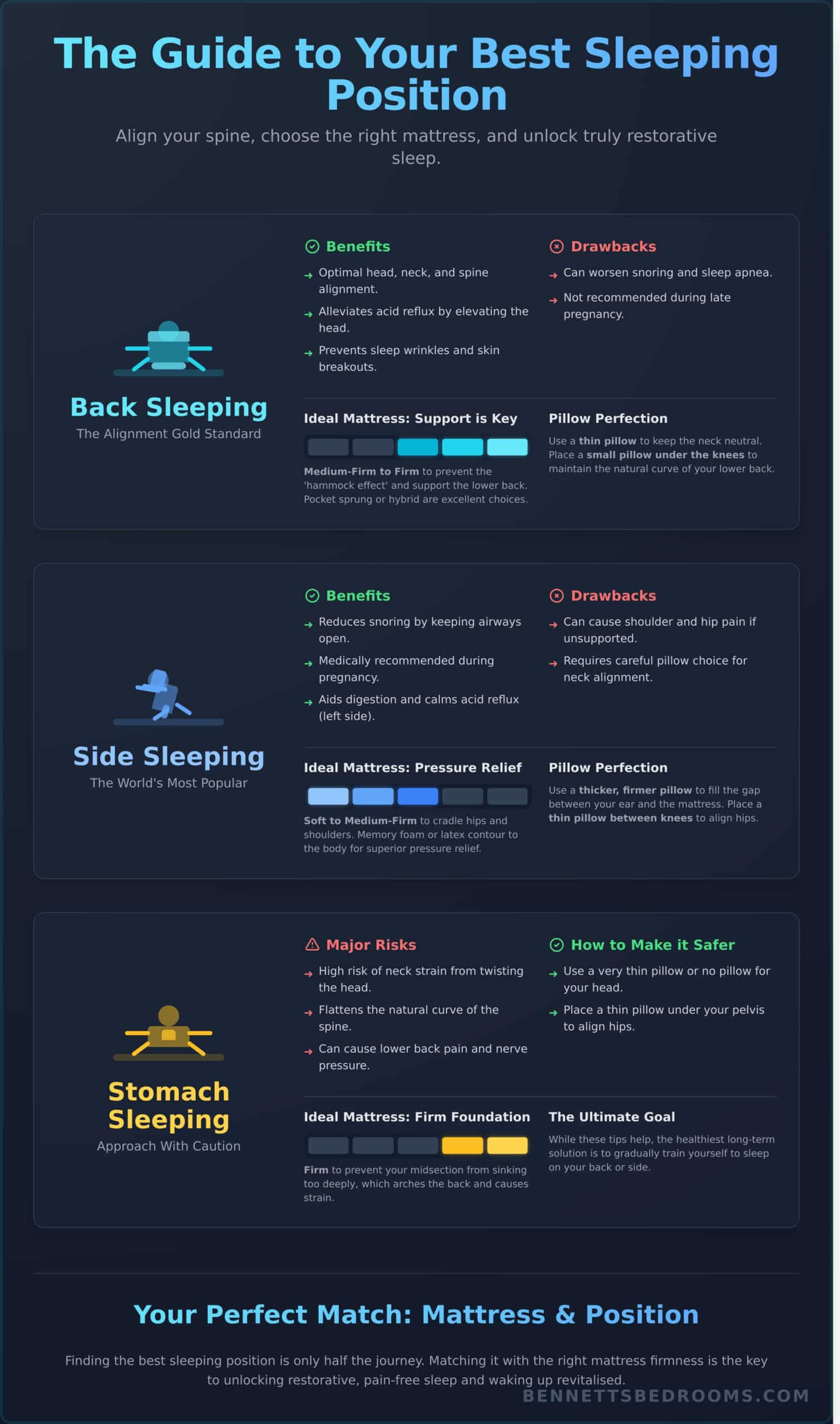
When it comes to achieving optimal spinal health, sleeping on your back is akin to giving your body the royal treatment. Health and sleep specialists widely regard this as the best sleeping position for most people because it allows your head, neck, and spine to rest in a neutral alignment. This minimises stress on your pressure points, preventing the aches that can result from unnatural curves forming during the night.
For a quick overview of how your posture affects your sleep, watch this helpful video from the experts:
Beyond spinal alignment, the benefits are numerous. This position can help alleviate acid reflux by keeping your head elevated above your stomach. It also has cosmetic advantages, as your face is not pressed against a pillow, which can help prevent sleep wrinkles and skin breakouts over time.
However, this position isn’t perfect for everyone. The primary drawback is its tendency to worsen snoring and sleep apnea. When lying on your back, gravity can cause the tongue to block the airway. Furthermore, medical professionals advise against back sleeping during late pregnancy due to potential pressure on major blood vessels. Always consult your doctor for personalised advice.
The Right Mattress for Back Sleepers
To truly benefit from back sleeping, the right mattress is non-negotiable. You need a surface that provides exceptional support to prevent your lower back from sinking and creating a stressful ‘hammock’ effect. We recommend a medium-firm to firm mattress. Premium pocket sprung or hybrid mattresses are excellent choices, offering the robust, targeted support needed to maintain perfect alignment all night long.
Perfecting Your Pillow Setup
Your pillow is just as crucial. A single, relatively thin pillow is often ideal to keep your neck neutral, not propped up too high. For enhanced support, a cervical pillow with a dedicated contour for your neck can be a worthwhile investment. To complete the setup and achieve ultimate pressure relief, place a small pillow under your knees. This simple trick helps maintain the natural curve of your lower back, ensuring a truly restorative, pain-free sleep.
Side Sleeping: The Most Popular Position for Overall Health
It is no coincidence that the majority of adults worldwide favour sleeping on their side. For many, this is the best sleeping position for overall health, but it requires the right support to truly excel. Its benefits are significant: it can naturally open your airways to reduce snoring, aid digestion, and is the medically recommended posture during pregnancy to enhance circulation. For those who experience acid reflux, sleeping on the left side specifically has been shown to calm symptoms and promote a more peaceful night.
Despite its advantages, side sleeping is not without its challenges. The direct pressure on your joints can lead to shoulder and hip pain if your mattress and pillows are not providing adequate support. To unlock a truly luxurious and restorative night’s sleep in this position, optimising your setup is essential.
The Best Mattress for Side Sleepers
As sleep specialists, we cannot overstate the importance of a quality mattress for side sleepers. The primary goal is achieving perfect spinal alignment while delivering superior pressure relief to the hips and shoulders. A mattress that is too firm will create painful pressure points, while one that is too soft will cause your spine to sag. We recommend a premium soft to medium-firm mattress, crafted from materials like memory foam or latex. These advanced materials contour to your body’s unique shape, cradling your joints and allowing you to sink in just enough for optimal alignment and comfort.
Choosing the Correct Pillow
Your pillow is crucial for maintaining a neutral spine. For side sleepers, a thicker, firmer pillow is needed to perfectly fill the space between your ear and the mattress. This support prevents your head from tilting, which can cause significant neck strain. To elevate your comfort and alignment further, place a thin pillow between your knees. This simple yet effective technique keeps your hips level, prevents your top leg from pulling your spine out of alignment, and reduces stress on your lower back, making it a key part of the best sleeping position for total body support.
Tips to Avoid Shoulder Pain
Waking with a sore shoulder can undermine the benefits of a full night’s rest. Fortunately, this common issue is often preventable with a few expert adjustments. To ensure you wake up feeling refreshed and pain-free, we suggest the following:
- Adjust Your Angle: Avoid sleeping directly on the point of your shoulder. Instead, try rotating your torso slightly forward or backward to distribute your body weight more evenly across your shoulder blade and ribcage.
- Check Your Pillow Height: A pillow that is too low is a primary cause of shoulder pain. It forces your neck to bend and your shoulder to collapse inward. Ensure your pillow is high and firm enough to provide robust support.
- Stretch Regularly: Incorporate gentle daily stretches into your routine to maintain shoulder mobility and health. Simple movements can counteract the nightly pressure and keep your joints flexible and strong.
Stomach Sleeping: The Position to Approach with Caution
While many find stomach sleeping comforting, evoking a sense of security, our sleep specialists advise that it is the most stressful position for your back and neck. This posture forces your lumbar spine into an unnaturally flat position, placing significant strain on the muscles and ligaments that support it. Furthermore, to breathe, you must twist your neck to one side for hours, which can lead to stiffness, pain, and long-term alignment issues.
Although it’s not the best sleeping position for spinal health, it does have one potential, isolated benefit: for some people, it can help reduce snoring and mild sleep apnea. However, the risks to your spine generally outweigh this advantage. If you are a dedicated stomach sleeper, there are crucial steps you can take to protect your body and achieve a more restorative night’s sleep.
How to Make Stomach Sleeping Safer
The single most important factor for a stomach sleeper is the mattress. A very firm surface is essential to prevent your torso and hips from sinking too deeply, which exaggerates the unnatural curve in your spine. A premium, firm pocket sprung mattress often provides the ideal support, keeping your body as level as possible and minimising spinal stress. Investing in the right foundation is the first step to mitigating the risks of this position.
The Pillow Strategy for Stomach Sleepers
Proper pillow use is critical for alignment. For your head, we recommend using a very thin pillow or no pillow at all. This reduces the angle of your neck twist, easing strain on the cervical spine. To further improve alignment, try placing a thin, flat pillow under your pelvis and lower abdomen. This small adjustment can help lift your hips, preventing your lower back from arching excessively during the night.
Tips for Transitioning to a Healthier Position
Ultimately, the healthiest goal is to train your body to sleep on your side or back. This transition takes time and patience, but these tips can help:
- Use body pillows: Strategically placing long pillows on either side of your body can create a physical barrier that makes it more difficult to roll onto your stomach unconsciously.
- Start right: Make a conscious effort to begin every night on your side or back. Over time, this repetition helps build a new sleeping habit.
- Be patient: Don’t get discouraged if you wake up on your stomach. Changing a lifelong habit is a gradual process.
Finding the right mattress and pillow combination can make this transition much more comfortable. As sleep specialists, we can help you find the perfect support system to guide you toward your personal best sleeping position. Explore our curated collection at bennettsbedrooms.com.
Finding Your Perfect Match: How Mattress Type Supports Your Sleep Style
Understanding the healthiest way to sleep is the first step, but putting it into practice night after night requires the right foundation. Your mattress is the single most crucial factor in supporting your posture while you rest. A premium, well-chosen mattress makes maintaining spinal alignment effortless, allowing your muscles to fully relax. Conversely, an old or unsuitable mattress can force your body into unnatural positions, undermining your efforts and contributing to back pain.
The fundamental principle is this: your preferred sleeping position dictates your mattress needs. Finding the perfect match ensures your spine remains neutral, from your neck down to your hips. This synergy between your body and your bed is the key to waking up refreshed and pain-free.
To simplify your choice, here is a quick guide matching the best sleeping position to the ideal mattress characteristics:
| Sleeping Position | Recommended Firmness | Recommended Mattress Type |
|---|---|---|
| Side Sleeper | Medium-Soft to Medium | Memory Foam or Hybrid |
| Back Sleeper | Medium-Firm to Firm | Pocket Sprung or Hybrid |
| Stomach Sleeper | Firm | Pocket Sprung |
| Combination Sleeper | Medium to Medium-Firm | Hybrid |
A Quick Guide to Mattress Types
Our curated collection at Bennetts Bedrooms features handmade, luxury options designed for restorative sleep. The main types include:
- Pocket Sprung: Featuring individual springs that move independently, these mattresses offer exceptional, responsive support. They are excellent for back and stomach sleepers who need robust spinal alignment.
- Memory Foam: Renowned for its superior pressure relief, memory foam contours precisely to your body, cradling the shoulders and hips. This makes it ideal for side sleepers.
- Hybrid: Combining the supportive core of pocket springs with the plush comfort of foam or latex layers, a hybrid offers the best of both worlds. Its versatility makes it a superb choice for combination sleepers or couples with different preferences.
The Role of Body Weight and Firmness
It’s important to remember that firmness is relative. A mattress will feel different to a person weighing 60kg than it does to someone weighing 100kg. Lighter individuals often require a slightly softer surface to allow their hips and shoulders to sink in just enough for proper alignment. Heavier individuals typically need a firmer mattress to ensure adequate support and prevent the spine from sagging.
Let Our Sleep Specialists Help
Choosing a new bed is a significant investment in your health and well-being. With so many factors to consider, expert guidance can make all the difference. Our team of Sleep Specialists is dedicated to understanding your unique needs, from your sleep style to your personal comfort preferences, ensuring you find the perfect sleep solution.
Experience the luxury of a perfectly matched bed. Book a consultation or visit our showroom in the Algarve.
Your Journey to Royal Comfort Starts Tonight
Choosing to sleep on your back or side is a powerful step towards better spinal health, but the journey doesn’t end there. The ultimate key to unlocking deep, restorative sleep is pairing your posture with the perfect foundation. Without the correct mattress supporting your body’s natural curves, even the best sleeping position can fall short of providing true, lasting comfort.
This is where our expertise becomes your advantage. As Sleep Specialists approved by the National Bed Federation (NBF), we provide more than just premium, handmade beds; we offer personalised guidance. Our experts will help you navigate our collection from world-renowned brands to find the perfect match for your unique sleep style, ensuring every night feels like a royal retreat.
It’s time to invest in your well-being. Find the perfect mattress for your sleeping style and Sleep Like Royalty. Your mornings will thank you for it.
Frequently Asked Questions About Sleeping Positions
What is the overall healthiest sleeping position for most people?
For optimal spinal health, sleeping on your back is widely regarded as the healthiest position. It allows your head, neck, and spine to rest in a neutral alignment, reducing pressure points and preventing aches. If you find this uncomfortable, side sleeping is an excellent alternative. Placing a premium pillow between your knees can further enhance alignment and provide a truly restorative, peaceful night’s sleep, ensuring you wake up refreshed and pain-free.
Can changing my sleeping position really stop me from snoring?
Absolutely. Snoring often occurs when sleeping on your back, as gravity can cause the tongue and soft palate to collapse into the back of your throat, partially blocking your airway. By switching to a side sleeping position, you can keep these airways open more effectively. This simple change can significantly reduce or even eliminate snoring, leading to a more peaceful night for both you and your partner and contributing to a higher quality of sleep.
What is the best sleeping position if I have lower back pain?
If you suffer from lower back pain, finding the best sleeping position is crucial for relief. Sleeping on your back with a pillow under your knees helps maintain the natural curve of your lower spine. Alternatively, sleeping on your side with a pillow placed between your bent knees prevents your upper leg from pulling your spine out of alignment. Both methods can alleviate strain, offering significant comfort and promoting healing throughout the night for a pain-free morning.
How do I know if my current mattress is wrong for my sleeping position?
Your body provides the clearest signs. If you consistently wake up with stiffness, numbness, or aches, particularly in your back or hips, your mattress is likely not providing the right support. Visible sagging or a noticeable body impression is another red flag. As sleep specialists, we advise that your mattress should support your spine’s natural curve. If it feels like you’re sinking too much or sleeping on a hard plank, it’s time for a premium upgrade.
How long does it take to get used to a new, healthier sleeping position?
Adjusting to a new sleeping position requires patience and consistency. It can take anywhere from a few nights to several weeks for your body to adapt. To aid the transition, strategically use quality pillows to support your new position and discourage you from reverting to your old one. Your commitment will be rewarded with improved spinal health and a more luxurious sleep experience, making the initial effort worthwhile and transforming your overall well-being.
Is the fetal position good or bad for you?
The fetal position can be comforting, but its health benefits depend on how you do it. A loose, relaxed fetal position is essentially side sleeping, which is excellent for spinal alignment and can even reduce snoring. However, curling into a very tight ball can restrict deep breathing and place undue strain on your neck and back. For the best results, aim for a relaxed posture with your torso and legs only slightly bent for a restorative night.
Does my pillow matter as much as my mattress for my sleeping position?
Yes, your pillow is just as vital as your mattress. Its primary function is to support your head and neck, ensuring they remain in neutral alignment with the rest of your spine. A pillow that is too high or too flat for your preferred sleeping position can cause significant strain and discomfort. Investing in a quality, specialist pillow tailored to your sleep style is a critical step toward achieving that perfect, ultra-relaxing sleep you deserve.
